
Bahraini gold bangles feature a lighter yellow tone, smoother finish, and thinner circular build, whereas Madrasi gold bangles feature a deep yellow hue, antique oxidized finish, and heavy solid construction. This complete guide breaks down the origin, appearance, purity, pricing, and occasion suitability of both iconic styles to help Pakistani buyers make confident, value-backed decisions.
Why Pakistani Women Are Particular About Their Bangles
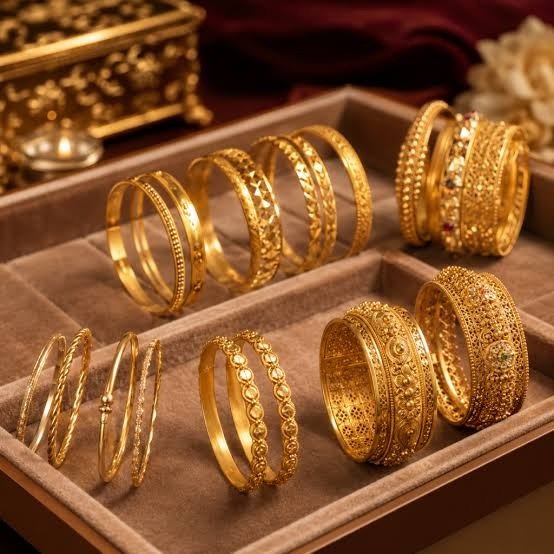
Bangles hold a distinct position in Pakistani jewelry culture because they carry simultaneous ceremonial, financial, and identity significance across all four provinces. A Pakistani woman’s bangle selection reflects her regional tradition, marital status, and family wealth, appearing at every major life event, including weddings, Eid, births, and engagements.
3 Key Reasons Bangles Are Carefully Selected in Pakistan
- Daily Visibility: Bangles remain visible during routine interactions, unlike heavy bridal necklaces or earrings.
- Occasion Layering: Pakistani women stack multiple bangle styles for weddings, Mehndi, and formal family events.
- Financial Security: Heavy gold bangles function as wearable liquid savings accessible during financial emergencies.
Occasion Matching: Different gold bangle styles serve distinct purposes. Lightweight Bahraini bangles suit formal gatherings and office environments, whereas heavy Madrasi karas dominate Barat events, Walimas, and Jahez collections.
Understanding these differences prevents costly purchasing mistakes such as overpaying on making charges or selecting lightweight designs for heavy bridal wear. Pakistani shoppers can explore our complete collection of gold bangles in Pakistan to compare both styles side by side before buying.
What Are Bahraini Gold Bangles?
Bahraini gold bangles originate from Bahrain’s renowned goldsmithing tradition and entered Pakistani markets through Gulf-returned workers and jewelry traders during the 1970s and 1980s. The name reflects the Gulf design origin rather than the physical origin of the gold metal itself.
Appearance & Design Features
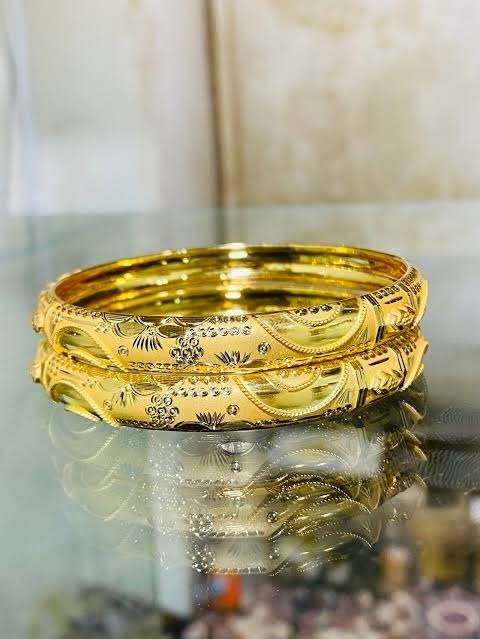
- Surface: High mirror polish or light, precise geometric engraving.
- Color Tone: Bright, lustrous yellow (lighter than Madrasi due to alloy composition).
- Build Structure: Thin to medium weight, often hollow or semi-solid.
- Patterning: Minimalist clean lines, subtle textures, or classic simple rope motifs.
Karat & Gold Purity
Bahraini bangles are most commonly forged in 21K purity (87.5% pure gold). Some jewelers offer 18K variants for budget-conscious buyers. The alloy mix gives it its characteristic bright, highly reflective finish.
Target Buyer Profile
Bahraini bangles best suit working women, Eid shoppers, and buyers seeking lightweight, sleek formal jewelry. They are a popular choice as engagement gifts or daily stackers. Urban families in Karachi, Lahore, and Islamabad favor this style for its modern, understated elegance.
What Are Madrasi Gold Bangles?
Madrasi gold bangles originate from the ancient South Indian goldsmithing traditions of Madras (now Chennai) and represent one of the oldest practiced jewelry styles in Pakistani bridal heritage. Master artisans brought these techniques to Hyderabad, Sindh, and Karachi after 1947, where multi-generational goldsmith families continue handcrafting authentic pieces.
Appearance & Design Features
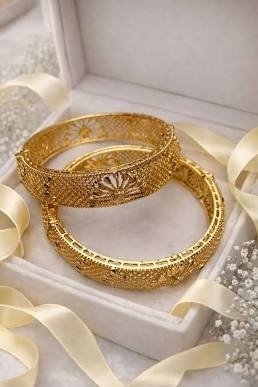
- Surface: Antique oxidized finish featuring deeply carved floral, temple, and heritage motifs.
- Color Tone: Deep, rich warm yellow resulting from high-purity gold alloys.
- Build Structure: Heavy, solid construction with no hollow sections.
- Patterning: Dense hand-carved motifs across the entire outer circumference.
Karat & Gold Purity
Madrasi karas are traditionally crafted in 22K purity (91.6% pure gold) across Pakistani markets. The high purity gives them their signature deep yellow glow, though 21K options are sometimes available at lower price points.
Cultural & Generational Role in Pakistan
Madrasi karas are a foundational staple in bridal sets and Jahez (dowry) collections across Punjab, Sindh, and Khyber Pakhtunkhwa. Their solid durability makes them ideal for generational transfer; mothers frequently select Madrasi karas for Jahez because they survive decades of storage without structural damage. Browse our hallmark-certified Madrasi karas in Pakistan collection to view authentic handcrafted designs.
Bahraini vs. Madrasi Bangles: Direct Comparison
| Feature / Dimension | Bahraini Bangles | Madrasi Bangles |
| Surface Finish | High mirror polish / Light geometric | Antique oxidized finish with deep relief |
| Pattern Density | Minimalist to moderate clean lines | Dense hand-carved temple / floral motifs |
| Color & Tone | Bright yellow (21K alloy) | Deep, rich warm yellow (22K alloy) |
| Gold Purity | Typically 21K (87.5%) | Typically 22K (91.6%) |
| Build & Weight | Thin, hollow or semi-solid (5–12 grams) | Fully solid construction (15–40 grams) |
| Making Charges | Lower (8% – 12%) | Higher (15% – 25% due to handwork) |
| Primary Usage | Daily wear, Office, Eid, Engagements | Barat, Walima, Jahez dowry investment |
Detailed Factors Explored
1. Color Tone & Purity Gap
- Bahraini (21K): Contains 87.5% pure gold. Higher copper/silver alloy content creates higher reflectivity and a lighter yellow hue.
- Madrasi (22K): Contains 91.6% pure gold. The 4.1% higher pure gold concentration yields a deeper, warmer glow.
- For a comprehensive look at gold purities, read our detailed 22K vs 24K Gold in Pakistan guide before making your final selection.
2. Weight, Build & Durability
- Bahraini Bangles: Weigh 5–12 grams per piece. Hollow/semi-solid builds make them comfortable for 8–10 hours of daily wrist wear.
- Madrasi Karas: Weigh 15–40 grams per piece. Fully solid metal provides extreme structural durability that withstands decades of wear and storage.
3. Price & Making Charge Comparison
Madrasi bangles carry a 20% to 40% overall cost premium over Bahraini bangles due to three compounding factors:
- Higher Karat Weight: 22K metal carries a higher per-gram rate than 21K.
- Heavier Gram Weight: Solid builds use 2x–3x more raw gold per piece.
- Craftsmanship Fees: Hand-carving requires 15%–25% making charges compared to 8%–12% for machine/semi-cast Bahraini styles.
Investment Tip: Buyers looking strictly for gold liquidity should choose plain or low-carving Madrasi karas to keep non-recoverable making charges minimal while maximizing pure gold weight.
Which Style Is Better for Pakistani Brides?
Bridal Choice Framework
- Main Event & Jahez Investment → Madrasi 22K Karas
- Heavy Visual Impact: Provides the commanding presence required for Barat and Walima lighting.
- Photographic Depth: Preferred by bridal photographers for strong visual texture under event lighting.
- Generational Durability: Solid 22K metal withstands decades of storage without denting.
- Extended Events & Daily Wear → Bahraini 21K Bangles
- Lightweight & Comfortable: Ideal for Mehndi, Dholki, and long post-wedding family visits.
- Versatile Layering: Easy to stack alongside existing sets or wear individually.
- Accessible Price Point: Delivers maximum wrist coverage and surface area per gram of gold.
Comparison at a Glance
| Factor | Madrasi 22K Karas | Bahraini 21K Bangles |
| Best For | Barat, Walima & Jahez Collection | Mehndi, Dholki, Eid & Daily Wear |
| Key Advantage | High purity & heirloom durability | High comfort & easy layering |
| Visual Style | Intricate, traditional & deep tone | Sleek, modern & bright mirror finish |
Investment Value & Resale Liquidity
Madrasi bangles offer higher long-term resale returns because they contain more grams of higher-purity (22K) gold.
Resale Factors Breakdown
- Karat Advantage: 22K gold yields a higher return per gram than 21K gold during buyback calculations.
- Making Charge Deductions: Remember that jewelers deduct making charges upon resale for both styles. Because Madrasi pieces have higher making charges, buying intricate designs increases non-recoverable costs.
- Long-Term Price Appreciation: Over holding periods exceeding 5 years, higher gold purity (22K) appreciates proportionally more.
Frequently Asked Questions
Can you mix Bahraini and Madrasi bangles in one set?
Yes. Mixing both styles is standard practice in Pakistani bridal styling. The contrast between bright, polished Bahraini bangles and dark, oxidized Madrasi karas creates striking visual texture. Brides often sandwich 4–6 Bahraini bangles between 2 heavy Madrasi end-karas on each wrist.
Which style is easier to resize or repair?
Bahraini bangles are much easier to resize because of their uniform finish. Madrasi karas require master goldsmiths skilled in antique oxidation; improper heating or sizing can permanently ruin the dark, hand-carved finish.
How do I spot machine-pressed imitations of Madrasi karas?
- Surface Irregularity: Genuine hand-carved pieces show subtle variations in depth. Machine pieces are unnaturally uniform.
- Weight Density: Authentic solid Madrasi pieces feel significantly heavier than hollow machine-pressed copies.
- Oxidation Depth: Real antique finish sits naturally inside carved crevices, whereas fake chemical blackening sits flat on top of the surface.
Final Buyer Checklist Before You Buy
Before making your purchase in major gold markets (such as Lahore, Karachi, or Peshawar’s Qissa Khwani Bazaar), verify these 6 points:
- Hallmark Stamp: Look for 916 (22K) on Madrasi pieces or 875 (21K) on Bahraini pieces.
- Live Weighing: Confirm exact weight in grams on a digital scale in your presence.
- Breakdown Receipt: Demand an itemized bill detailing raw gold rate, net weight, and making charge percentage.
- Solid vs. Hollow: Verify whether the bangle is solid gold or hollow core.
- Market Rate Check: Compare per-gram rates across at least 3 Sarafa Bazaar sellers.
- Return/Exchange Policy: Get written confirmation on buyback and exchange deduction policies.
Curious about how traditional gold jewelry takes shape from molten metal to finished artwork? Read our detailed guide on casting gold jewellery in Pakistan to discover the centuries-old artisan techniques behind Pakistan’s finest handmade pieces.

